Bread and a Red Apple
Editor’s Note: This piece is the First Place Winner of the HerVoice 2026 Writing Contest.
Reader Note: This story shares a powerful personal reflection on courage, education, and resilience. It includes sensitive references to violence and harm against girls, so younger readers may wish to read with a trusted adult or take a break if needed.
The rays of the sun caress my face. I look at the sky, at the patches of clouds that take on a new shape every moment: sometimes a flower, sometimes a book.
I must write something to tell what is happening in my city — what cannot be seen in photographs; the story of girls who are familiar with explosions and count the gunshots at night, yet with their colorful bangles, rewrite their own destiny. They fly kites in the courtyard of their home and connect with the sky, touching it.
I once dreamed of becoming a teacher and walking proudly to school, teaching the girls of my land mathematical equations — along with a little laughter, joy, and life.
The wind blows, and the shapes of the clouds change, and the rays of the sun kiss my cheek. The scent is cinnamon tea, a feminine fragrance. I want to write about the day I felt proud to be a girl. My story is old and authentic, like the Silk Road.
That day, I was only thirteen years old. I wore a burqa so that there would be no opposition or obstacle to my going to school.
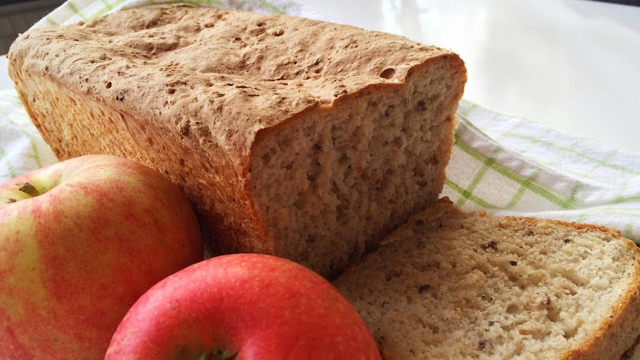
It was a cold autumn morning. Time stopped for a moment; the seconds no longer moved. I put on my torn shoes, and my mother brought me a little bread and a red apple — my usual breakfast.
Zahra, my friend, and I were laughing as we neared the school when, suddenly, my entire face burned and the world went dark.
If one day I see God, I will certainly complain to Him; I will tell Him that I was far too young to endure that burning and pain. Zahra was screaming, but I had no voice. There was only pain. My scream was knotted in my chest. I did not cry; I sat down—there in the alley, on the stones and dust.
The attacker threw acid on our faces and quickly left; he disappeared like the smoke of an explosion. I remained, with my eyes closed and my face burning, and with Zahra’s screams.
I love cinnamon tea because its scent goes deep into my being and gives life. I love life — with this wounded face, with these acid scars, with this eye that remained closed after that incident.
After the attack, my father did everything he could to stop me from returning to school, because he was certain that danger was behind every wall.
But that day I looked at my books, at my blue UNICEF notebooks. I loved studying. I had to become a teacher, and this was a path to survival.
That day, many girls in my city became victims of acid and never returned to school. But I did not want to stay at home. I had to fight against fate. I had a beautiful dream.
It was night, and there was the scent of fresh bread and a feeling of calm. My father asked me, “Do you need anything?”
Softly, I answered, “I want another burqa and a new pair of sneakers, Father. I am going back to school.”
My father fell silent — the kind of masculine silence that shakes mountains and dries the roots of fruit trees. He looked at me differently and said nothing.
The acid wound on my face was healing, but I lost sight in one of my eyes, just like my doll that was lost forever in childhood.
The next day, my father brought me a blue burqa and new white sneakers. The burqa was compulsory, but the sneakers were a dream.
I embraced my sneakers with joy, and that day I made a promise to the Jasmine flowers in our garden that tomorrow I would certainly return to school and one day become a teacher.
The day I returned to school, I felt deeply proud to be a girl. The teachers applauded for me and cried; perhaps the angels cried for me as well. But I know that God was proud of the strength in my heart — proud of my being a girl.
Years have passed since that incident. Today I write protest poetry, I read books, and I paint my nails. But the painful truth is that now there is no school for girls anymore.
The girls in my city are deprived of the right to go to school. This is not an imaginary city; it is a city within real borders, a city where flowers die and teaching mathematical equations is a sin.
I remember my promise to the Jasmine flowers in the garden, which are no longer there. But I am still here — the same girl with the acid-burned face.
I have turned the basement of my house into a school, a secret school for girls, to teach them everything that is forbidden:
Mathematics,
Chess,
Playing the harmonica.
It is noon.
The call to prayer is heard.
I look at the mirror on the wall.
I pray and recite Surah Ya-Sin.
I and this struggle.
A small blackboard with a few colored pieces of chalk.
The sound of my students’ laughter
in a forgotten corner of the world.
A city where every day they pass a law against us,
And we break it
by lighting a candle,
and with hope;
a hope that is no longer just a word, but a story
The story of bread and a red apple.
This article is part of the HerVoice initiative, published by NSHSS in partnership with EmpowerHer, an NSHSS student partner organization. EmpowerHer supports Afghan girls and women through mentorship and storytelling opportunities that help them find their voice and create change in their communities and beyond. Learn more on the EmpowerHer partner page.
Image taken from http://glutenfriagodsaker.blogspot.com/2014/10/glutenfritt-appelbrod.html, by the author