What I Carried in My Voice
Editor’s Note: This piece is the Third Place Winner of the HerVoice 2026 Writing Contest.
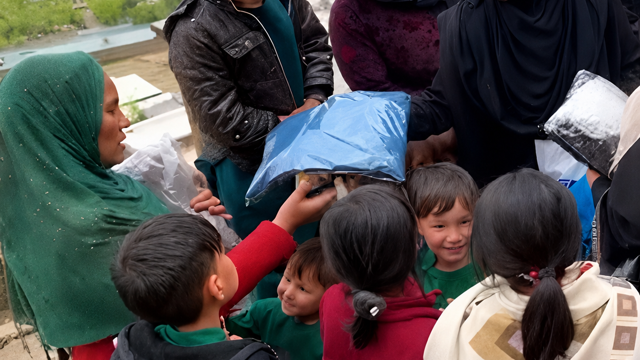
December light in Kandahar does something strange to distance. It flattens it. Four men on two motorcycles had stopped thirty feet from where we stood, and in that pale winter afternoon, the space between us felt suspended, the way a glass feels before it hits the floor.
Nobody moved. Not my volunteers, not the women waiting with their hands open for warm jackets and blankets, not the small boy pressed to his mother's side holding whatever patience he had carried through the cold.
Then boots on pavement. Voices rising, not at any one of us specifically but at the entire fact of us, women in a courtyard, making decisions, distributing things, existing with our hands full.
Most of my team understood Dari. They caught the violence in the tone without every syllable.
I caught every syllable.
Pashto is not something I studied. You do not study your mother tongue. You do not study the particular exhaustion in your grandmother's sentences when she was tired, or the shorthand that develops in a clinic corridor when a woman needs you to translate her fear into something a male doctor will take seriously before she bleeds out. Pashto was the first architecture of my thinking. It was how I learned what things cost, what people meant when they chose one word over another, what they were really saying when they thought no one important was listening.
I pressed my hand to the arm of the volunteer beside me. Step back, I told her, in Dari. Let me speak.
Then I turned and walked toward them.
What I felt in those steps was not heroism. Genuinely, it was not. The fear was real, it sat in my chest and tightened with each footfall, but underneath it was something more durable, a kind of clarity about the fact that I was the right person for what was about to happen. Years of interpreting in clinical settings had taught me something no formal curriculum names: that a man shouting in a doorway is sometimes simply a man who has run out of other options. Meeting that energy with its own reflection solves nothing. I had learned this from sitting beside women in examination rooms, translating between what they were experiencing and what they were permitted to say out loud.
All of that knowledge walked into that courtyard with me.
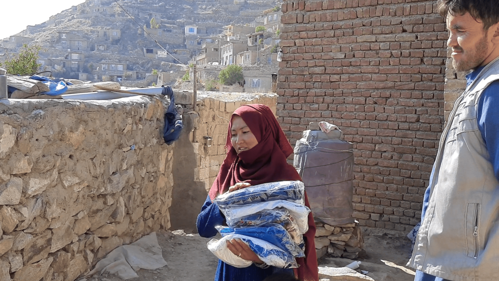
I spoke first, without preamble, without apology. We were not political. We were giving warm clothing to old people and children who were cold. When I said the word for children I watched the youngest of the four, twenty years old, maybe twenty-one, let his gaze travel to the pile of jackets, then to the boy standing with his mother.
That was the opening I needed.
We negotiated. I gave ground where it cost nothing. I held ground where it did. When they left, not warmly but without incident, I turned back to my group.
My hands were shaking. Not from fear exactly, but from the sustained effort of keeping still everything in me that had wanted to move.
I have thought for a long time about what strength actually means for a woman in a country that has spent years dismantling every condition that makes strength possible. What I keep returning to is not a single moment but an accumulation. A language absorbed in a kitchen over years. An instinct sharpened across hundreds of hours beside women in pain. A refusal to stop learning even after learning had been made into a form of transgression.
I am, in many ways, a person built from uncredited labor. A hundred-and-fifty-page medical guide translated into Pashto, alone, in the margins of other obligations. Teaching women in remote villages to recognize danger signs during pregnancy. Interpreting across four languages in settings where one wrong word changed what kind of care a woman received.
None of that looked like power to anyone watching.
But in that courtyard, in winter, when four men arrived expecting to find women without the language to answer them, all of it arrived at once.
The story people want about strength is usually the confrontation, the refusal, the moment captured in clean light. What I want to offer is the less visible thing underneath it. The accumulation. Everything I had carried without knowing I was carrying it, without anyone confirming it mattered, had been making me into someone capable of standing in that particular danger and knowing, with some certainty, what to do next.
I had been told, in many ways and by many forces, that being a woman in Afghanistan was a diminishment. A ceiling too low to stand beneath.
That afternoon I understood it differently.
Every limitation had been, in its own crooked and unasked-for way, a preparation.
And I had used all of it.
This article is part of the HerVoice initiative, published by NSHSS in partnership with EmpowerHer, an NSHSS student partner organization. EmpowerHer supports Afghan girls and women through mentorship and storytelling opportunities that help them find their voice and create change in their communities and beyond. Learn more on the EmpowerHer partner page.
Images owned by the author